A therapist I’ll call Dana had been seeing the same client for about three years. He was a 41-year-old engineer, articulate, insightful, always on time. He had been on four different antidepressants, done a round of CBT, then DBT skills, then back to CBT. Every few months something would click and Dana would think, finally. Then it would unwind. By the third year, most sessions were spent putting out whatever fire had started that week. She knew he needed more. What she didn’t know was how to say it, who to call, or what would happen to the work they’d built together.
If any of that feels familiar, this is for you. It covers how to decide when a higher level of care is warranted, how to refer a client to residential treatment without losing a week to phone tag, and how to keep your client’s treatment, and your relationship with them, intact.
When to Refer a Client to Residential Treatment
There is a formal answer and a practical one.
The formal answer is the Level of Care Utilization System, or LOCUS, published by the American Association of Community Psychiatrists. It scores adults across six dimensions, including risk, functioning, comorbidity, and how they’ve responded to treatment so far. A composite in the Level 5 range points to someone who needs round-the-clock structure but not a hospital bed. If your agency or payer uses LOCUS, run it. It gives you language the insurer will recognize.
The practical answer is pattern recognition. Dana’s client fit it. Adequate trials of therapy and medication, more than one, with nothing that held. Functioning that looked fine from the outside because he was spending all his energy making it look fine. And a steady drift toward the edge of risk: passive thoughts about not waking up, said quietly, never quite meeting the threshold for hospitalization.
Add to that the client whose primary problem is depression or trauma or a personality disorder, but whose drinking or pill use is what got noticed, so they went to rehab, got sober, and came out with the actual condition untouched. These clients are everywhere in outpatient caseloads and they are among the best candidates for a residential program that treats the psychiatric diagnosis as the main event.
One caveat that matters. If someone is in immediate danger, residential care is the wrong call. That’s an emergency department or an inpatient unit. Helios West Palm, for instance, doesn’t run its own crisis stabilization but will help place a client and bring them into residential care once they’re stable.
What Information Residential Treatment Centers Need for a Referral
Here is where most referrals stall. The clinician calls, the admissions coordinator asks for records, the release isn’t signed, three days pass. By the time the packet arrives the client has talked themselves out of it.
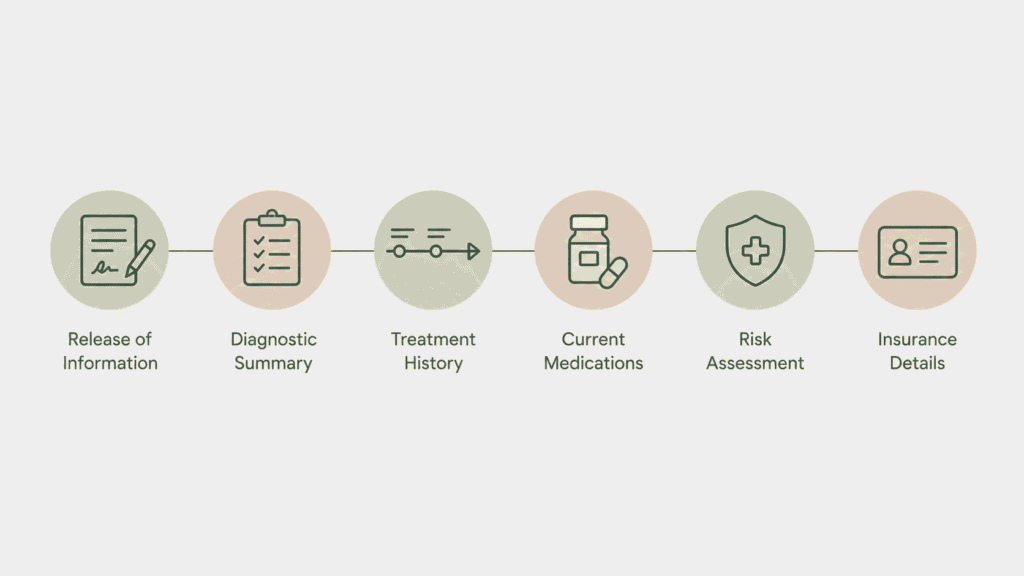 So get the release of information signed before you pick up the phone. Name the facility on it. Then pull together a short diagnostic summary in your own words: what you think is going on, what you’ve ruled out, and why you believe outpatient care has hit its ceiling. One page is plenty. Attach the medication list with doses and the prescriber’s name, and be candid about adherence. Include your most recent risk assessment and the safety plan.
Two things people forget. First, substance use history, including whether the client has been through detox. Most residential mental health programs, Helios among them, do not detox on site, and a client who needs it will have to be medically cleared first. Second, insurance information, so benefits can be checked right away. Residential mental health care is covered under federal parity law by most major plans; Helios’s team will verify benefits before anyone commits to anything, usually inside a day.
The facility will do its own full psychiatric evaluation on admission. That’s a good thing. Your packet isn’t a substitute for it; it’s what keeps the nuances from getting lost. You can see how Helios sequences the whole thing on its admissions page.
What to Tell a Client About Residential Treatment
Dana’s client heard “residential” and pictured a locked ward. The other common picture is a 12-step rehab with bunk beds. Neither is what you’re recommending, so say what it actually is.
It’s daily clinical work. Individual therapy, group work, medication management with a psychiatrist who sees the client every day instead of every six weeks. Many programs round that out with art, music, or yoga therapy, which sounds soft until you’ve watched someone with severe dissociation use a body-based practice to stay in the room. It’s not a retreat and it’s not open-ended. Length of stay is set by progress, not by a calendar.
And tell them plainly that you’re not handing them off. You’ll be there when they come back. Clients who believe that are far more likely to go.
If they’re on the fence, offer to sit in on the first admissions call. A warm handoff from someone they already trust does more to close the gap between “I’ll think about it” and “I’m going” than anything else I’ve seen.
Protecting Continuity of Care After Residential Treatment
Before you refer anywhere, ask three questions. Will I get updates, assuming my client consents? When does discharge planning begin? Will someone on the treatment team talk to me before my client walks out the door?
The answers tell you most of what you need to know about the program. The ones worth your referrals start aftercare planning well before discharge and treat you as part of the plan rather than an afterthought. Ask for a discharge summary that includes the final formulation, every medication change, what the team saw working, and concrete recommendations. Then book the first post-discharge session before the client leaves. The first two weeks home are where gains evaporate, and an appointment already on the calendar is the cheapest insurance there is.
A Word on Fit
No program is right for everyone, and the good ones will tell you so. Helios West Palm is a residential program near West Palm Beach, licensed at RTF Level 1A and working at the LOCUS Level 5 / ASAM 3.5 level. It’s built for adults with serious mental illness who are still functioning, often reasonably well, but have not found lasting relief anywhere else, including clients with co-occurring substance use when the psychiatric condition comes first. It doesn’t take adolescents, doesn’t detox, and doesn’t treat primary addiction. If your client doesn’t fit, admissions will say so and point you somewhere that does. That kind of honesty is a decent test for any program you’re considering.
Dana’s client went. He stayed seven weeks. When he came back, he and Dana finally had something to work with.
Frequently Asked Questions
How long does a residential referral take?
With a signed release and a complete packet, many programs finish insurance verification and clinical screening within a day or two.
Can I refer a client who is actively using?
Yes, when the substance use is secondary to a psychiatric diagnosis and the client is medically stable. Anyone who needs detox has to complete it first.
Will the facility keep me in the loop?
With your client’s written consent, most residential programs provide updates and coordinate discharge planning with the referring clinician.
Does insurance cover residential mental health treatment?
Most major plans do under the Mental Health Parity and Addiction Equity Act. Coverage varies, so verify before admission.
To talk through a specific referral, call the Helios West Palm admissions team at (844) 484-4996 or send a message.